

Everyday users should compare AI models like Mistral, OpenAI’s ChatGPT, Google’s Gemini, and Anthropic’s Claude based on their specific needs for tasks such as creative writing, coding assistance, data analysis, and language translation. Key comparison points include accuracy, speed, cost, ease of use, and ethical considerations like data privacy and potential biases, especially important with regulations like the EU AI Act. For students, understanding which AI excels at research summaries or essay drafting, while adhering to academic integrity, is crucial. For professionals, the focus shifts to efficiency gains in report generation or content creation.
Remember when ‘AI’ felt like something from a science fiction movie? Fast forward to today, and it’s popping up everywhere, from the smart assistant in your phone to tools helping you draft emails or even generate images. But with so many advanced AI models now accessible, like Mistral, OpenAI’s ChatGPT, Google’s Gemini, and Anthropic’s Claude, figuring out which one actually helps your daily grind – especially if you’re a student trying to ace a paper or someone simply trying to organize their life – can be a real puzzle.
It’s not just about picking the ‘best’ AI; it’s about picking the best AI for you. What works for a developer in North America might not be ideal for a student in Europe, or a small business owner in South America. Each of these models has its own flavor, its own strengths, and often, its own quirks. Understanding these differences can save you time, improve your output, and genuinely make your life easier.
This guide cuts through the marketing speak to give you a clear, practical comparison of these leading AI models. We’ll look at how they perform for everyday tasks, from writing assistance and brainstorming to data handling, so you can confidently choose the tool that fits your specific needs.
A Quick Overview: Comparing AI Models for Everyday Users
Here’s a snapshot of what differentiates Mistral, OpenAI, Gemini, and Claude for common daily applications:
- Mistral AI: Known for being lightweight, fast, and highly customizable. It’s often favored by developers for its efficiency and open-source flexibility, making it a strong contender for those who need to integrate AI into specific applications or prefer more control.
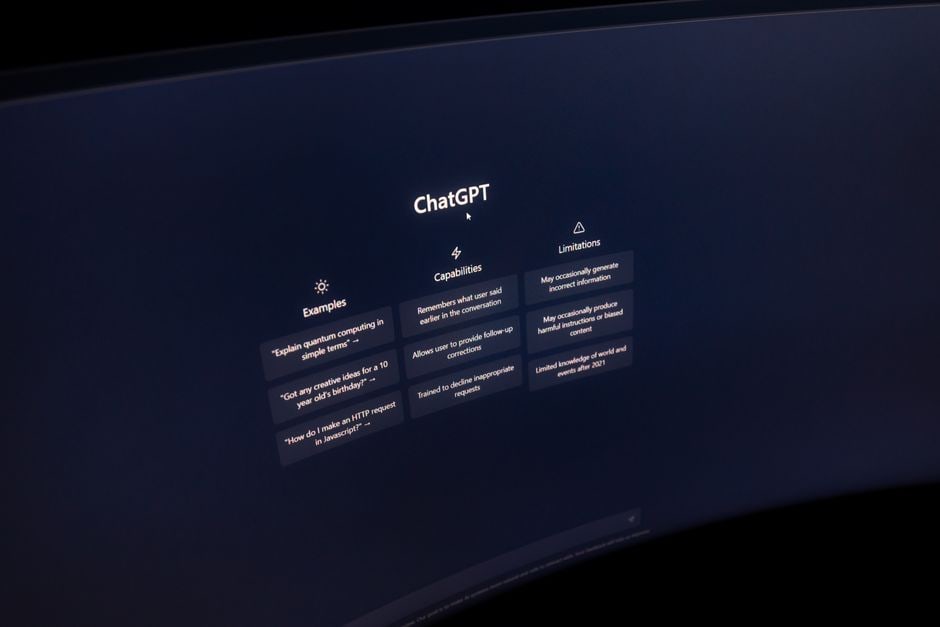
- OpenAI (ChatGPT): The most widely recognized, strong in general knowledge, creative writing, and conversational fluency. ChatGPT excels at broad tasks and user-friendliness, making it a go-to for many first-time AI users.
- Google Gemini: Designed for multimodal capabilities, meaning it handles text, images, audio, and video inputs. Gemini is powerful for tasks requiring diverse data understanding and integration within Google’s ecosystem.
- Anthropic (Claude): Prioritizes safety and ethical AI. Claude is adept at long-form text processing, complex reasoning, and generating less ‘hallucinatory’ (factually incorrect) content, often preferred for sensitive or critical applications.
Deep Dive: What Everyday Users Should Compare in AI Models
1. General Knowledge and Conversational Abilities
For most users, the first interaction with an AI is a simple question or a request for information. How well do these models handle general knowledge queries, and how natural do their conversations feel?
OpenAI (ChatGPT) – The Conversational Champion
ChatGPT, especially its GPT-4 iteration, set the benchmark for conversational AI. It’s excellent at understanding nuances, maintaining context over long conversations, and generating human-like text. Need to draft a polite but firm email to your landlord? Or brainstorm ideas for a local community project? ChatGPT often shines here, offering a wide array of styles and tones. Its vast training data makes it a generalist powerhouse.
Google Gemini – Integrated Intelligence
Gemini, being Google’s offering, naturally benefits from deep integration with Google’s search capabilities. This often means its general knowledge can be remarkably current and comprehensive. If you’re looking for up-to-date information or want to combine a web search with a creative writing task, Gemini can be particularly effective. For instance, asking Gemini to ‘summarize the latest news on renewable energy in Brazil and then draft a social media post about it’ leverages its strengths effectively.
Claude – Thoughtful and Thorough
Claude tends to be more cautious and less prone to speculative answers, which can be a double-edged sword. While it might not always offer the most ‘creative’ or assertive response, its answers are often well-reasoned and detailed. For tasks where accuracy and thoughtfulness are paramount—like drafting a sensitive policy statement or summarizing academic papers—Claude’s careful approach is a significant advantage.
Mistral AI – Lean and Direct
Mistral, while powerful, often presents as more direct and less verbose than its counterparts. Its strength lies in efficiency. For quick, factual lookups or code snippets, it’s very capable, but for highly nuanced, extended conversations, it might not feel as ‘chatty’ as ChatGPT or Gemini. Its open-source variants also mean community contributions can enhance its general knowledge over time.
2. Creative Writing and Content Generation
From drafting a compelling story for a creative writing class to generating marketing copy for a small business, creative tasks are a common use case for AI.
OpenAI (ChatGPT) – The Prolific Creator
ChatGPT is often the go-to for creative tasks. Its ability to mimic various writing styles, generate poetry, scripts, or engaging narratives is impressive. If you need a blog post outline, a short story idea, or even help writing lyrics, ChatGPT can be a very imaginative co-pilot. For students in North America working on creative assignments, this can be invaluable for overcoming writer’s block.
Demystifying AI: How to Explain AI Decisions to Clients and Stakeholders
Google Gemini – Multimodal Muse
Gemini’s multimodal nature gives it an edge here. Imagine providing an image of a vibrant street market in Bogotá, Colombia, and asking Gemini to ‘write a short story inspired by this photo, focusing on the scent of coffee and fresh fruit.’ It can draw inspiration from various input types, leading to more unique and contextually rich creative outputs. Its ability to understand prompts across different media makes it highly versatile for content creators.
Claude – Measured Imagination
Claude excels at long-form, structured writing. If you need to draft a detailed report, a white paper, or a complex legal document, Claude’s tendency towards logical progression and comprehensive analysis is a major plus. While it might not generate the most whimsical poetry, it’s excellent for prose that requires clarity, coherence, and adherence to specific guidelines.
Mistral AI – Developer’s Canvas
While not overtly marketed for creative writing in the same way, Mistral’s customizable nature means developers can fine-tune it for specific creative tasks. For instance, a developer could fine-tune a Mistral model on a dataset of specific genre fiction to generate highly targeted creative content. For general users, it’s less plug-and-play for creative tasks but holds significant potential for those willing to get under the hood.

3. Data Analysis and Summarization
Handling large chunks of text, extracting key information, or even assisting with data interpretation are critical for academic and professional work.
Claude – The Summarization Specialist
Claude is particularly strong in handling lengthy texts. Its larger context window (the amount of text it can ‘remember’ at once) means it can summarize entire books, long research papers, or detailed legal documents with impressive accuracy and coherence. For students preparing for exams or professionals needing to digest lengthy reports, Claude can be a lifesaver. It’s also good at identifying key arguments and extracting specific data points from complex documents.
Google Gemini – Integrated Insights
With its multimodal capabilities, Gemini can summarize information from mixed sources. Upload a presentation, a PDF, and some audio notes, and Gemini can often synthesize insights across them. This is incredibly useful for project managers or researchers who deal with diverse data formats. Its integration with Google Workspace also makes it efficient for summarizing documents directly within your Google Drive.
OpenAI (ChatGPT) – Versatile Data Assistant
ChatGPT, especially with plugins or custom GPTs, can be very effective for data analysis. It can generate code (e.g., Python for data manipulation), explain complex statistical concepts, and summarize text efficiently. While its default context window might be smaller than Claude’s, its ability to interact and refine summaries through dialogue makes it highly flexible. For students struggling with a statistics assignment, asking ChatGPT to explain a concept and then provide example calculations can be very helpful.
Mistral AI – Efficient Processing
Mistral’s efficiency makes it suitable for quick data processing tasks, especially when deployed locally or in custom applications. While it might not have the same default summarization prowess for extremely long documents as Claude, its speed and resource efficiency mean it can be highly effective for specific, targeted data extraction or summarization tasks within a larger workflow, particularly for users with privacy concerns who prefer on-device processing.
4. Ethical Considerations and Safety
The rise of AI has brought important discussions about bias, misinformation, and data privacy. For everyday users, understanding a model’s approach to these issues is crucial.
Anthropic (Claude) – Safety-First Design
Anthropic was founded with a strong emphasis on AI safety and ethics. Claude is explicitly designed to be helpful, harmless, and honest. This means it often refuses inappropriate requests, avoids generating biased content, and provides disclaimers when it’s unsure or when a topic is sensitive. For users concerned about generating misinformation or engaging with harmful content, Claude’s conservative approach offers a significant layer of assurance. This aligns well with the growing focus on responsible AI, as seen in initiatives like the EU AI Act, which aims to ensure AI systems are safe and respect fundamental rights.
Google Gemini – Responsible AI Focus
Google has invested heavily in responsible AI development, and Gemini reflects this. It incorporates safety filters and aims to avoid generating harmful or biased content. However, like all large models, it’s not immune to these issues entirely. Google frequently updates Gemini to address emerging ethical challenges, underscoring its commitment to aligning with evolving global standards for AI safety, particularly relevant for diverse user bases across Europe, North America, and South America.
OpenAI (ChatGPT) – Iterative Improvement
OpenAI has made significant strides in safety and ethics, with continuous improvements to filter out harmful content and reduce bias. However, as an earlier and widely accessible model, ChatGPT has also been at the forefront of discussions around misinformation and potential misuse. OpenAI actively seeks user feedback and implements safeguards, but vigilance from the user is still important, especially for critical or sensitive information. It’s an ongoing process of refining the model to be more solid and ethical.
Navigating AI Search Habits for People Who Still Need Reliable Answers
Mistral AI – Community-Driven Ethics (Open Source)
For open-source models like some of Mistral’s offerings, ethical considerations often fall to the community and individual implementers. While Mistral itself builds powerful base models, the responsibility for how these models are fine-tuned and deployed, including their safety and ethical guardrails, often rests with the end-users or developers. This offers immense flexibility but also requires a higher degree of awareness and responsible development practices from those utilizing the models.
5. Cost and Accessibility
The best AI model is one you can actually use. Cost, free tiers, and platform accessibility play a big role in everyday utility.
OpenAI (ChatGPT) – Accessible Pioneer
ChatGPT offers a solid free tier (GPT-3.5) that is more than sufficient for many everyday users. For advanced features, access to GPT-4, and higher usage limits, a paid subscription (ChatGPT Plus) is available. This tiered approach makes it highly accessible for students on a budget while offering powerful options for those needing more.
Google Gemini – Integrated and Tiered
Gemini is integrated into various Google products, with a free tier available for most users. More powerful versions, like Gemini Advanced, are often part of Google One subscriptions, offering a value proposition for users already embedded in the Google ecosystem. This makes it very convenient for users in regions like Europe and North America who heavily rely on Google services.
Claude – Premium and Focused
Claude often offers a free tier with usage limits, but its most powerful versions and larger context windows are typically behind a paid API or subscription model. Given its focus on complex reasoning and safety, it’s often positioned for users with more demanding or critical tasks, making the cost a reflection of its specialized capabilities.
Mistral AI – Flexible and Open-Source Options
Mistral offers both commercial API access to its powerful models and openly available, smaller models that can be run on consumer-grade hardware. This makes it incredibly cost-effective for developers and users who can self-host, potentially incurring only hardware costs. For those using its API, pricing is competitive and often scales with usage, making it a flexible choice for various budgets.
FAQ: Answering Your Everyday AI Comparison Questions
What should students compare when choosing an AI model?
Students should compare AI models based on their ability to assist with research summarization, essay drafting, brainstorming, and coding help, while also considering academic integrity. Look for models with strong long-text processing (like Claude) for papers or versatile creative assistance (like ChatGPT) for projects. Accessibility and cost are also key factors.
How does the EU AI Act affect everyday AI users?
The EU AI Act primarily targets providers and deployers of AI systems, aiming to ensure AI is safe and respects fundamental rights. For everyday users in Europe, this means a greater expectation of transparency, accuracy, and safety from the AI tools they use, particularly in high-risk applications, leading to more trustworthy and ethical AI interactions.
Is Google Gemini better than OpenAI’s ChatGPT for general tasks?
For general tasks, both Google Gemini and OpenAI’s ChatGPT are excellent. ChatGPT often excels in creative writing and conversational flow, while Gemini shines with multimodal input and up-to-date information due to its Google search integration. The ‘better’ choice often depends on whether your task benefits from current web knowledge and image understanding (Gemini) or nuanced conversation and creativity (ChatGPT).
When should an everyday user consider Mistral AI?
An everyday user, especially one with some technical comfort or specific integration needs, should consider Mistral AI for its efficiency, speed, and potential for customization. If you’re looking for a lightweight model for specific tasks, want to integrate AI into a custom application, or prefer open-source flexibility and local deployment options, Mistral offers compelling advantages.
Which AI model is best for summarizing very long documents?
For summarizing very long documents, Anthropic’s Claude is often considered superior due to its significantly larger context window. This allows it to process and understand much more text at once, leading to more coherent and comprehensive summaries of lengthy articles, research papers, or reports compared to other models.
Key Takeaways for Choosing Your Everyday AI Companion
Navigating the world of AI doesn’t have to be overwhelming. When comparing Mistral, OpenAI (ChatGPT), Gemini, and Claude, remember that the best tool isn’t about raw power, but about how well it fits your specific needs. For general creative and conversational tasks, OpenAI’s ChatGPT remains a strong, user-friendly contender. If you need multimodal capabilities, up-to-date information, or deep integration with the Google ecosystem, Gemini often pulls ahead. For tasks requiring meticulous summarization of long documents, ethical considerations, and a focus on safety, Claude stands out. And for those seeking efficiency, customization, or open-source flexibility, Mistral AI presents a compelling option, particularly for more tech-savvy individuals or specific applications.
Ultimately, the best way to choose is to try them out. Most offer free tiers or trial periods. Experiment with different prompts and tasks that are relevant to your daily life, whether you’re a student in Europe juggling assignments, a professional in North America streamlining workflows, or an entrepreneur in South America generating content. Your ideal AI companion is the one that consistently helps you achieve your goals more effectively and efficiently.
For more detailed breakdowns and practical advice on leveraging AI in your daily life, make sure to read clearer AI guides on Vie En Mots.