
Renter-friendly smart home ideas for apartments center around devices that are non-invasive, easy to install without tools or damage, and simple to remove when you move out. This typically includes smart plugs, adhesive-backed lighting strips, battery-powered sensors, portable smart speakers, and security cameras that don’t require drilling. The goal is to enhance comfort, security, and energy efficiency through technology that leaves no trace, allowing renters in places like New York City, Buenos Aires, or Berlin to enjoy modern conveniences without landlord conflicts.
When you’re renting, the idea of a ‘smart home’ can feel like a distant dream. Most smart home installations involve drilling, wiring, or permanent fixtures that are strictly off-limits in a leased property. You might eye those smart thermostats or integrated lighting systems with envy, thinking they’re just not for you. This often leads to a resigned acceptance of a ‘dumb’ apartment, missing out on the everyday conveniences and efficiencies technology offers.
However, the smart home market has evolved significantly. There’s a whole universe of devices designed specifically with portability and non-permanence in mind. These aren’t just scaled-down versions; they’re thoughtfully engineered solutions that respect your lease agreement while still delivering impressive functionality. For families, especially, these can be a lifesaver, offering peace of mind and simplified routines without the hefty investment or permanent commitment.
The key is knowing what to look for and how to integrate these pieces thoughtfully. It’s about leveraging technology to make your rented space more comfortable, secure, and energy-efficient, all while ensuring you get your security deposit back when the time comes to move on. Let’s explore how to achieve a truly smart apartment, even when major modifications are out of the question.
Understanding the ‘Renter-Friendly’ Smart Home Mindset
Before diving into specific gadgets, it’s crucial to adopt the right perspective. A ‘renter-friendly’ smart home isn’t about replicating a fully custom-built system, but rather about maximizing the impact of portable, non-damaging devices. Think of it as a modular approach: each piece works independently but can also integrate into a larger, cohesive system.
The guiding principles here are:
- Non-Invasive Installation: No drilling, no permanent wiring, no painting. Adhesives, magnetic mounts, or simply plugging into an outlet are your friends.
- Portability: You should be able to pack it up and take it to your next place. This also means avoiding devices that are hardwired or require professional installation.
- Minimal Reversibility: When you leave, the apartment should look exactly as it did when you moved in. No holes, no residue, no damage.
- Cost-Effectiveness: While not strictly a ‘renter-friendly’ requirement, choosing more affordable, versatile devices makes sense when you’re not investing in a permanent fixture for a property you don’t own.
For families in apartments across Europe, North America, or South America, this mindset allows for practical upgrades. Imagine managing lights from your couch in a small flat in Paris, France, or setting up a simple security camera to monitor your kids’ playroom in an apartment in São Paulo, Brazil. These are tangible, everyday benefits.
Practical Smart Home Ideas for Renters Who Cannot Change the Apartment
Here are some of the best smart home ideas for renters, focusing on solutions that are easy to implement and remove.
1. Smart Plugs and Power Strips
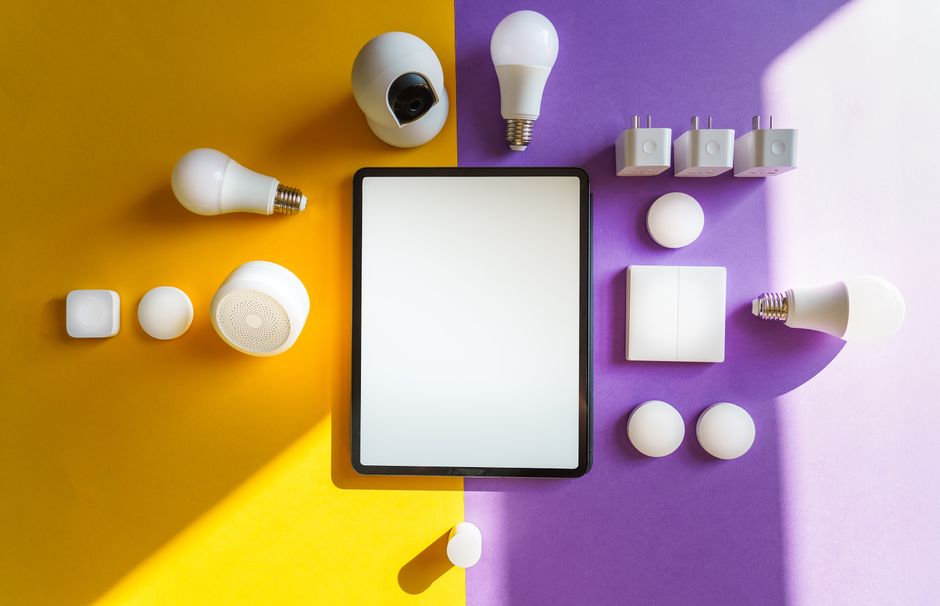
This is arguably the easiest and most impactful entry point for smart home ideas for renters. Smart plugs turn any ‘dumb’ appliance into a smart one. Plug in a lamp, a coffee maker, or a fan, and suddenly you can control it with your voice or an app. Brands like TP-Link Kasa, Meross, or Amazon Smart Plug are widely available and integrate well with Google Assistant and Amazon Alexa.
- Why it’s renter-friendly: You just plug them in. No installation, no damage.
- Real-life use: Schedule your coffee machine to start brewing before you wake up. Turn off lights you forgot downstairs from your bedroom.
2. Smart Lighting (Bulbs and Strips)
Replacing existing light bulbs with smart bulbs is a practical advantage. Phillips Hue, Sengled, and Wyze offer a variety of options. For accent lighting, adhesive LED light strips (like those from Govee or Philips Hue Play Gradient Lightstrip) are perfect for behind TVs, under cabinets, or along shelves, providing dynamic lighting without any permanent fixtures.
Greenworks Tools Powers Smarter Outdoor and Garden Care
- Why it’s renter-friendly: Screw in a bulb, stick on a strip. Fully reversible.
- Real-life use: Create mood lighting for movie night, adjust brightness for reading, or set lights to turn on automatically when you arrive home.
3. Portable Smart Displays and Speakers
Devices like the Google Nest Hub or Amazon Echo Show and their speaker-only counterparts (Google Nest Mini, Amazon Echo Dot) are the central nervous system for many smart homes. They provide voice control, display information, play music, and can even act as a hub for other smart devices.
- Why it’s renter-friendly: They’re plug-and-play. Just find an outlet.
- Real-life use: Ask Google or Alexa for the weather, set timers for cooking, play music, or view your smart camera feed.
4. Battery-Powered Sensors (Motion, Door/Window)
Enhance security and automation with small, battery-powered sensors. Companies like Aqara, Ring, or Wyze offer motion sensors and contact sensors that can be attached with adhesive strips. These can trigger lights, send notifications, or even integrate with portable security cameras.
- Why it’s renter-friendly: Peel and stick installation. No wiring.
- Real-life use: Get an alert if a window opens unexpectedly. Have a hallway light turn on automatically when you walk by at night.
5. Wireless Security Cameras
Choose cameras designed for indoor use that don’t require drilling. Options like the Wyze Cam Pan, Arlo Essential Indoor Camera, or Ring Indoor Cam simply plug into an outlet and connect to your Wi-Fi. Many offer magnetic bases or come with small, non-damaging adhesive options.
- Why it’s renter-friendly: Plug in, connect to Wi-Fi, place on a shelf.
- Real-life use: Monitor pets while you’re out, keep an eye on a sleeping baby, or deter potential intruders. In many North American cities, these are popular choices for apartment security.
6. Smart Blinds and Curtain Openers
While full smart blinds can be costly and hard to install, there are retrofit solutions. Devices like SwitchBot Curtain or Soma Smart Shades 2 can motorize existing curtains or blinds, attaching discreetly without any permanent modifications to your windows or walls.
- Why it’s renter-friendly: Attach to existing hardware, no new installation.
- Real-life use: Schedule your blinds to open with the sunrise, or close them automatically during the hottest part of the day to save on cooling costs.
7. Smart Thermostats (Portable Options)
This is a trickier category, as most smart thermostats replace your existing unit. However, some portable options exist. For example, the Ecobee SmartSensor can extend the reach of an Ecobee thermostat (if your landlord has already installed one, or if you bring one from a previous home that can be easily reinstalled upon moving out). More broadly, smart plugs can control space heaters or fans, offering a ‘smart’ climate control workaround without touching the building’s central system.
- Why it’s renter-friendly: Minimal interaction with existing wiring, or no interaction at all.
- Real-life use: Control a portable heater from your phone, making sure a room is warm before you enter it.
Comparing Smart Home Hubs and Ecosystems for Renters
Choosing an ecosystem can feel overwhelming, but for renters, simplicity and compatibility are key. Most portable smart devices are designed to work with one or more major ecosystems.
| Ecosystem | Pros for Renters | Cons for Renters | Example Devices |
|---|---|---|---|
| Amazon Alexa | Wide device compatibility, affordable Echo devices, great for voice control. | Can feel heavily integrated with Amazon services, privacy concerns for some. | Echo Dot, Echo Show, Amazon Smart Plug, Ring Indoor Cam |
| Google Home / Assistant | Excellent voice assistant, good integration with Android devices, strong search capabilities. | Device ecosystem slightly smaller than Alexa, relies heavily on Google services. | Nest Hub, Nest Mini, Chromecast, Google Smart Plug |
| Apple HomeKit | Strong privacy focus, excellent integration with Apple devices, very intuitive for Apple users. | Fewer compatible devices, often higher price point, requires Apple devices. | HomePod Mini, Eve Motion Sensor, Philips Hue (HomeKit compatible) |
| Samsung SmartThings | Good for diverse device integration (Zigbee/Z-Wave), offers local control, strong automations. | Requires a hub (sometimes integrated into Samsung TVs), steeper learning curve. | SmartThings Hub (or compatible Samsung TV/fridge), SmartThings Motion Sensor |
| Independent Brands (e.g., Wyze, Kasa) | Often very affordable, simple setup, solid apps for their own ecosystem. | Less cross-compatibility, may require separate apps for different brands. | Wyze Cam, TP-Link Kasa Smart Plug, Govee LED Strips |

Common Mistakes to Avoid When Setting Up Your Renter-Friendly Smart Home
Even with the best intentions, it’s easy to make missteps that can lead to frustration or, worse, violate your lease. Being mindful of these common pitfalls will save you headaches.
1. Ignoring the ‘Reversibility’ Rule: This is the biggest one. Before installing anything, ask yourself: ‘Can I remove this without leaving a trace?’ Many tenants get excited and use strong adhesives, forget to label wires (if any temporary wiring is used), or inadvertently scratch surfaces. Always test adhesive strength in an inconspicuous area first, and ensure you have proper removal tools.
2. Over-Complicating Your Setup: Starting with too many devices or trying to automate everything at once can be overwhelming. Begin with one or two simple smart home ideas for renters, like smart plugs for lamps, then gradually expand. Learning one system well before adding another will prevent frustration and ensure a smoother experience.
Greenworks Tools Brings Innovation to Every Outdoor Project
3. Neglecting Wi-Fi Strength: Smart devices rely on a strong, stable Wi-Fi connection. In larger apartments, or those with thick walls (common in older buildings in Europe), you might encounter dead zones. Before investing heavily, check your Wi-Fi signal in areas where you plan to place devices. A simple mesh Wi-Fi system, like those from Eero or Google Nest Wifi, can significantly improve coverage and is completely renter-friendly.
4. Forgetting About Data Security: Every smart device connected to your network is a potential entry point for security breaches. Use strong, unique passwords for each device and your Wi-Fi network. Regularly update firmware. Consider using a reputable password manager to keep track of all your credentials. Many smart devices, especially cheaper ones, have default passwords that are never changed, making them easy targets. Google and Samsung, for instance, offer solid security features within their ecosystems, but users must still activate and manage them diligently.
5. Not Reading the Fine Print of Your Lease: While most of these suggestions are non-invasive, it’s always wise to re-read your lease agreement for any specific clauses about modifications, even minor ones. Some leases might have broad language about anything attached to walls or windows, regardless of permanence. When in doubt, a quick, polite email to your landlord for clarification can save a lot of trouble.
FAQ: Smart Home for Renters
What smart home devices are completely non-invasive for apartments?
Completely non-invasive smart home devices for apartments include smart plugs, smart light bulbs, portable smart speakers (like Google Nest Mini or Amazon Echo Dot), and indoor security cameras that simply plug into an outlet. Many battery-powered sensors also use adhesive strips for mounting, making them easy to install and remove without leaving any marks.
Can I use a smart thermostat in a rented apartment?
Directly replacing a landlord-provided thermostat with a smart one is usually not advised unless explicitly permitted, as it often involves wiring and permanent changes. However, you can use smart plugs to control portable heaters or fans, or integrate external temperature sensors (like Ecobee SmartSensors) with an existing smart thermostat if you’ve already had one.
Are Wi-Fi security cameras safe for renters?
Wi-Fi security cameras are generally safe for renters, provided you use strong, unique passwords, enable two-factor authentication, and keep the device’s firmware updated. These cameras are easy to set up and remove, making them ideal for temporary living situations, offering peace of mind without permanent installation.
How can I automate my apartment lighting without wiring?
You can automate your apartment lighting without any wiring by using smart light bulbs (which screw into existing fixtures) or adhesive LED light strips. Both can be controlled via an app, voice assistant, or schedules, offering significant convenience and ambiance without any permanent modifications.
What’s the best smart home ecosystem for someone living in a rental?
For renters, the best smart home ecosystem prioritizes ease of installation, portability, and wide device compatibility. Amazon Alexa and Google Home are often top choices due to their extensive range of compatible devices, user-friendly voice control, and the abundance of affordable, non-invasive smart devices that integrate smoothly.
Can I improve my apartment’s energy efficiency with smart devices?
Yes, you can significantly improve your apartment’s energy efficiency with smart devices. Smart plugs can schedule appliances to turn off when not in use, smart lighting reduces unnecessary illumination, and smart blinds can help regulate indoor temperatures by opening or closing automatically, all contributing to lower utility bills without permanent changes.
Embracing smart home ideas for renters doesn’t have to mean compromising your lease or breaking the bank. With the right approach and a focus on portable, non-invasive technology, you can enjoy all the conveniences of a connected home. From automating your lights to enhancing your security, there’s a wealth of options available that respect the boundaries of rental living. For more practical technology guides, be sure to read more practical technology guides on Vie En Mots.